Zari & Zardozi
“Mughal goldwork of the imperial courts.”
The Story
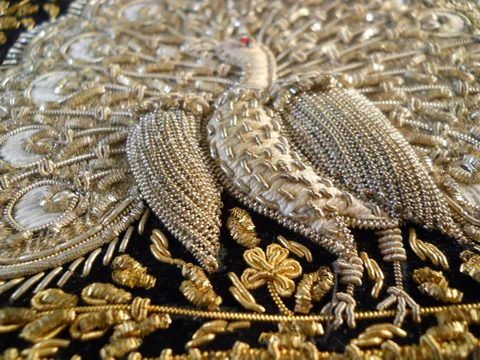
Brought from Persia by Mughal emperors, Zardozi was the imperial embroidery of choice. Zari and Zardozi are among India's most luxurious and prestigious embroidery traditions, renowned for their intricate metallic threadwork and royal heritage. The word "Zardozi" comes from the Persian words "Zar" meaning gold and "Dozi" meaning embroidery, literally translating to "gold embroidery." The craft was introduced to India from Persia and flourished during the Mughal era, particularly under Emperor Akbar's patronage in the 16th century. Skilled artisans were invited to royal courts to create elaborate embroidery for garments, furnishings, ceremonial textiles, and palace décor. Over time, Zardozi became a symbol of luxury, royalty, and artistic excellence. Traditionally, pure gold and silver wires were used to create intricate patterns on silk, velvet, satin, and brocade fabrics. The embroidery adorned royal attire, wedding garments, turbans, footwear, wall hangings, and decorative textiles. As the craft evolved, artisans incorporated pearls, beads, sequins, stones, and crystals to enhance its richness and beauty. Today, Zari and Zardozi continue to be celebrated in bridal wear, couture fashion, accessories, home furnishings, and ceremonial textiles. The craft remains an important source of livelihood for thousands of artisans while preserving a centuries-old legacy of craftsmanship and luxury.
The Technique
Gold and silver threads, sequins, beads stitched onto velvet/silk stretched on an aada (frame). Zari and Zardozi embroidery are created through a meticulous hand-embroidery process using metallic threads, beads, sequins, stones, and decorative embellishments. The design is first traced onto fabric stretched tightly on a wooden frame called an adda. Skilled artisans then use a hooked needle known as an aari or traditional embroidery needles to stitch gold or silver-colored metallic threads onto the fabric. Additional embellishments such as pearls, mirrors, sequins, beads, crystals, dabka, nakshi, and zari cords are carefully attached to create raised and textured patterns. The embroidery is worked entirely by hand, often requiring weeks or months to complete a single piece. The result is a richly decorated textile known for its intricate detailing, luxurious appearance, and timeless elegance.