Tanjore Painting
“Gold-leaf splendour of the Chola kings.”
The Story
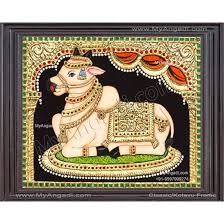
Emerging in the 16th century under Maratha patronage in Tanjavur, distinguished by lavish use of 22-carat gold foil. Tanjore Painting, also known as Thanjavur Painting, is one of India's most celebrated classical art forms, originating in Thanjavur (Tanjore), Tamil Nadu. The tradition dates back over 400 years, flourishing during the reign of the Nayaka and Maratha rulers who patronized art, culture, and temple architecture in South India. Known for its rich colors, gold foil work, decorative embellishments, and devotional themes, Tanjore Painting was traditionally created to adorn temples, palaces, and homes. The paintings primarily depict Hindu deities such as Lord Krishna, Lord Ganesha, Goddess Lakshmi, Lord Murugan, and scenes from Indian mythology. The art form combines painting, relief work, and ornamentation, making it unique among Indian painting traditions. Artists used natural pigments, gold foil, semi-precious stones, and intricate detailing to create radiant and visually striking compositions. The central figures are often portrayed with large expressive eyes and are richly adorned with jewellery and decorative elements. Over centuries, Tanjore Painting evolved into a treasured heritage craft that continues to be practiced by artisan families and artists across Tamil Nadu. Today, these paintings are admired globally as symbols of devotion, craftsmanship, and South India's rich artistic legacy.
The Technique
Built up in layers on a wooden board with chalk paste — semi-precious stones, glass pieces and pure gold foil embedded. Tanjore Painting is created through a meticulous process that combines sketching, relief work, gold embellishment, and hand painting. Artists first prepare a wooden board covered with cloth and coated with a mixture of chalk powder and adhesive to create a smooth surface. The design is then sketched and raised relief work is added using a paste made from limestone powder and natural binders. Semi-precious stones, glass beads, and decorative elements are embedded into the relief areas before applying gold foil, which gives the painting its signature richness and brilliance. Once the ornamentation is complete, artists hand-paint the figures and background using vibrant colors, carefully highlighting details of clothing, jewellery, and facial expressions. The finished artwork is polished and framed, resulting in a distinctive painting known for its three-dimensional effect, luminous gold work, and devotional beauty.
Traditional Motifs
Shop Tanjore Painting Products
New Tanjore Painting products are coming soon.