Pattachitra
“Cloth scrolls of the Jagannath tradition.”
The Story
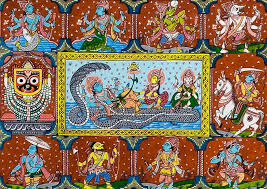
Pattachitra (literally 'cloth picture') emerged in the 12th century around the Jagannath Temple in Puri. Hereditary Chitrakara families have painted these intricate narratives for over 1000 years. Pattachitra is one of India's oldest and most revered traditional painting traditions, originating in the state of Odisha and parts of West Bengal. The name "Pattachitra" comes from the Sanskrit words "Patta" meaning cloth and "Chitra" meaning picture, literally translating to "painting on cloth." The art form is believed to be over 1,000 years old and is closely associated with the worship of Lord Jagannath at the famous Jagannath Temple in Puri, Odisha. Traditionally, Pattachitra paintings were created as sacred artworks depicting stories from Hindu mythology and were used in religious rituals and temple traditions. The origins of Pattachitra are deeply connected to the Jagannath cult, where artists known as Chitrakars created painted representations of Lord Jagannath, Balabhadra, and Subhadra. During the annual Anasara period, when the temple deities remain out of public view, devotees worship painted Pattachitra images instead of the idols. Over centuries, the craft evolved into a sophisticated storytelling tradition, portraying scenes from the Ramayana, Mahabharata, Krishna Leela, Dashavatara, and various Hindu legends. The paintings became known for their intricate detailing, decorative borders, bold outlines, and vibrant natural colors. Traditionally painted on specially prepared cloth, palm leaves, and walls, Pattachitra continues to be practiced by artisan families who have preserved the craft through generations. Today, the art has expanded beyond religious themes to include contemporary products such as wall art, textiles, home décor, and souvenirs while retaining its traditional essence.
The Technique
Cotton cloth is treated with tamarind seed paste and chalk, polished smooth, then painted with brushes made of buffalo hair using natural stone and vegetable colours. Pattachitra is created through a highly detailed and traditional hand-painting process that involves preparing a special canvas, sketching intricate designs, and painting with natural colors. Artisans first prepare the patta (canvas) by layering cotton cloth with a mixture of tamarind seed paste and chalk powder, which is then dried and polished to create a smooth surface. The design is drawn freehand using fine brushes, followed by bold outlines and detailed motifs inspired by mythology, temple traditions, and nature. Natural pigments derived from minerals, stones, conch shells, lamp soot, and plant sources are used to create vibrant colors such as red, yellow, blue, white, and black. The paintings are characterized by intricate detailing, decorative borders, precise line work, and the absence of perspective or shading. Once completed, a protective lacquer coating is applied to enhance durability and shine. Entirely handmade, the process requires exceptional skill, patience, and generations of artistic knowledge, making every Pattachitra painting a unique expression of Odisha's rich cultural and spiritual heritage.