Mithila Art
“Sister-craft to Madhubani, on cotton.”
The Story
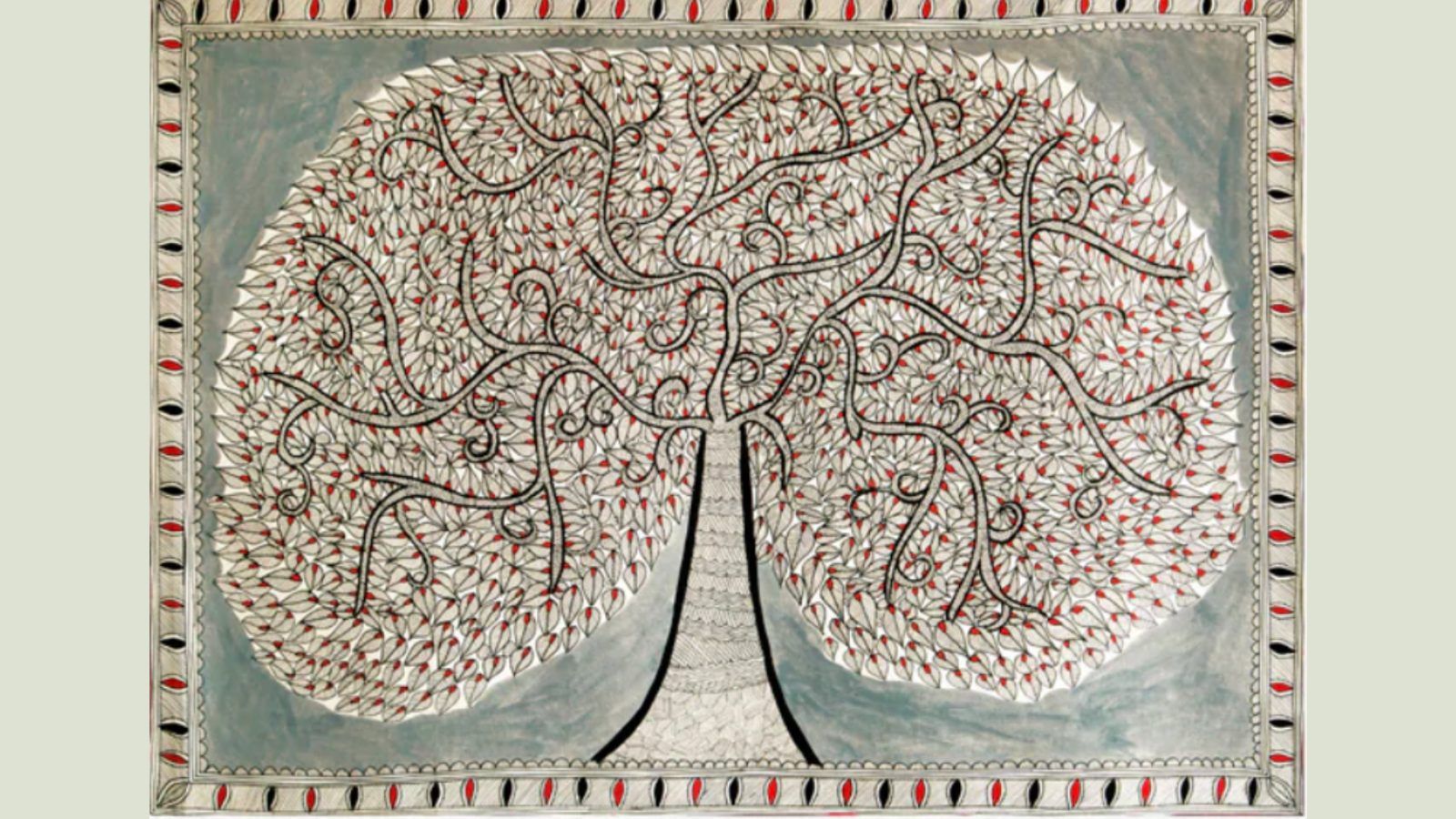
Mithila art encompasses the broader regional tradition, often done on large cotton tapestries. Mithila Art is known for its vibrant colors, intricate patterns, bold outlines, and symbolic motifs. Different styles evolved within the tradition, including Bharni, Kachni, Tantrik, Godna, and Kohbar, each with its own unique visual language and cultural significance. Today, Mithila Art serves as both a cultural heritage and a source of livelihood for thousands of artisans, particularly women. The craft has gained global recognition for its storytelling, symbolism, and artistic excellence while continuing to preserve the rich traditions of the Mithila region.
The Technique
Same natural pigments as Madhubani, applied on handwoven cotton for tapestries spanning several feet. Mithila Art is created through a meticulous hand-painting process that combines bold outlines, intricate patterns, and vibrant colors to depict stories from mythology, nature, rituals, and daily life. Artists begin by drawing freehand designs on paper, canvas, fabric, or walls using bamboo pens, twigs, nib pens, or fine brushes. The outlines are then filled with detailed motifs such as fish, peacocks, lotus flowers, trees, the sun, and traditional geometric patterns. Traditionally, natural colors derived from turmeric, indigo, flowers, leaves, soot, rice paste, and minerals were used, although contemporary artists also work with acrylic and poster colors. One of the defining features of Mithila Art is that empty spaces are rarely left blank; they are filled with fine lines, dots, cross-hatching, and decorative patterns to create a rich and balanced composition. Entirely handmade, the process requires patience, precision, and generations of artistic knowledge, making every Mithila artwork a unique expression of cultural heritage and storytelling.