Lac Jewellery
“Ancient resin jewellery of the bridal trousseau.”
The Story
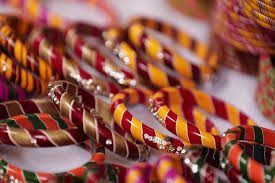
Lac — natural resin produced by insects on host trees — has been used in India for over 2000 years. Lac Jewellery is one of India's oldest and most vibrant traditional crafts, known for its rich colors, intricate embellishments, and cultural significance. The craft is made using lac, a natural resin secreted by the lac insect (Kerria lacca), which is primarily found on trees in regions of India. The history of lac craftsmanship dates back more than 2,000 years, with references found in ancient Indian texts and archaeological findings. Lac was traditionally used to create decorative objects, ornaments, bangles, and ceremonial accessories. Over time, artisans transformed this natural material into exquisite jewellery that became an important part of Indian culture and traditions. Lac jewellery flourished under royal patronage, particularly in Rajasthan, where artisans developed intricate techniques of shaping, coloring, and decorating lac with mirrors, beads, stones, and metal embellishments. The craft became especially popular among royal families and was often worn during weddings, festivals, and special occasions. Among all lac products, lac bangles became the most iconic, symbolizing prosperity, good fortune, and marital happiness in many Indian communities. Different regions developed their own unique styles, motifs, and color combinations, making lac jewellery a diverse and culturally rich craft. Today, artisans continue to innovate by blending traditional techniques with contemporary designs, creating necklaces, earrings, bracelets, rings, and fashion accessories that appeal to modern consumers while preserving the heritage of this ancient craft.
The Technique
Lac is heated, mixed with mineral colours, kneaded into shape on a wooden block, then embedded with mirrors and stones. Lac Jewellery is created through a traditional process of heating, molding, decorating, and polishing natural lac resin. Artisans first soften the lac by heating it over a controlled flame and mix it with natural or synthetic colors to achieve vibrant shades. The softened lac is then shaped by hand around metal, wooden, or resin bases using specialized tools. Once the desired shape is formed, decorative elements such as mirrors, beads, stones, crystals, pearls, and metallic embellishments are carefully embedded into the surface while the lac remains warm. After cooling and hardening, the jewellery is polished and finished to enhance its shine and durability. This intricate handmade process requires precision, creativity, and years of experience, making each piece of lac jewellery unique and reflective of India's rich craft heritage.