Chikankari
“Shadow-work whispers from Awadh.”
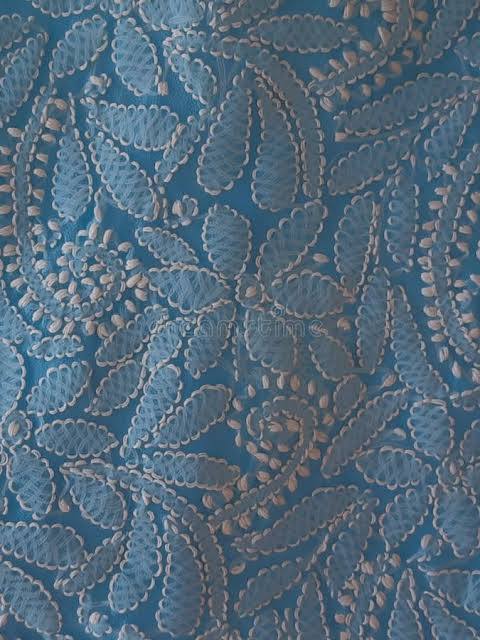
The Story
Introduced to Lucknow by Mughal empress Nur Jahan in the 17th century. Uses 36 distinct stitches.
The Technique
The core technique of Chikankari is painstaking hand-embroidery that follows a precise multi-step process from design printing to final washing.The creation of a single piece relies on a specialized division of labor across three distinct artisan groups: 1. Block Printing (Chhipa)The Blueprint: The fabric is laid flat on long tables, and the design outline is stamped using hand-carved wooden blocks.Washable Ink: Artisans use a temporary, water-soluble dye mixture made from glue and indigo indigo or charcoal powder to guide the embroiderers. 2. Hand Embroidery (Karahgari)Artisans, predominantly women working from home, sew over the printed ink patterns. Chikankari utilizes a repertoire of over 32 distinct stitches, categorized into three functional types:Flat Stitches: Basic, delicate stitches like Tepchi (a fine running stitch used for outlines) and Bakhiya (shadow work done on the reverse side to create an opaque sheen on the front).Embossed Stitches: Raised, textured knots like Phanda (resembling small millet grains) and Murri (grain-shaped pearly knots) that add dimension.Openwork (Jaali): A signature technique where the artisan uses a needle to gently separate the warp and weft threads of the fabric and buttonhole stitch them open. This creates a delicate net-like screen without cutting the cloth. 3. Washing & Finishing (Dhobi)Ink Removal: The embroidered garment is soaked and washed repeatedly in water to completely remove the temporary blue or grey block-printing ink.Bleaching & Starching: The fabric is treated, starched, and ironed to give the cotton or georgette threads its signature crisp, pristine texture.
Traditional Motifs
Shop Chikankari Products
New Chikankari products are coming soon.