Bawan Buti
“52 motifs, one saree.”
The Story
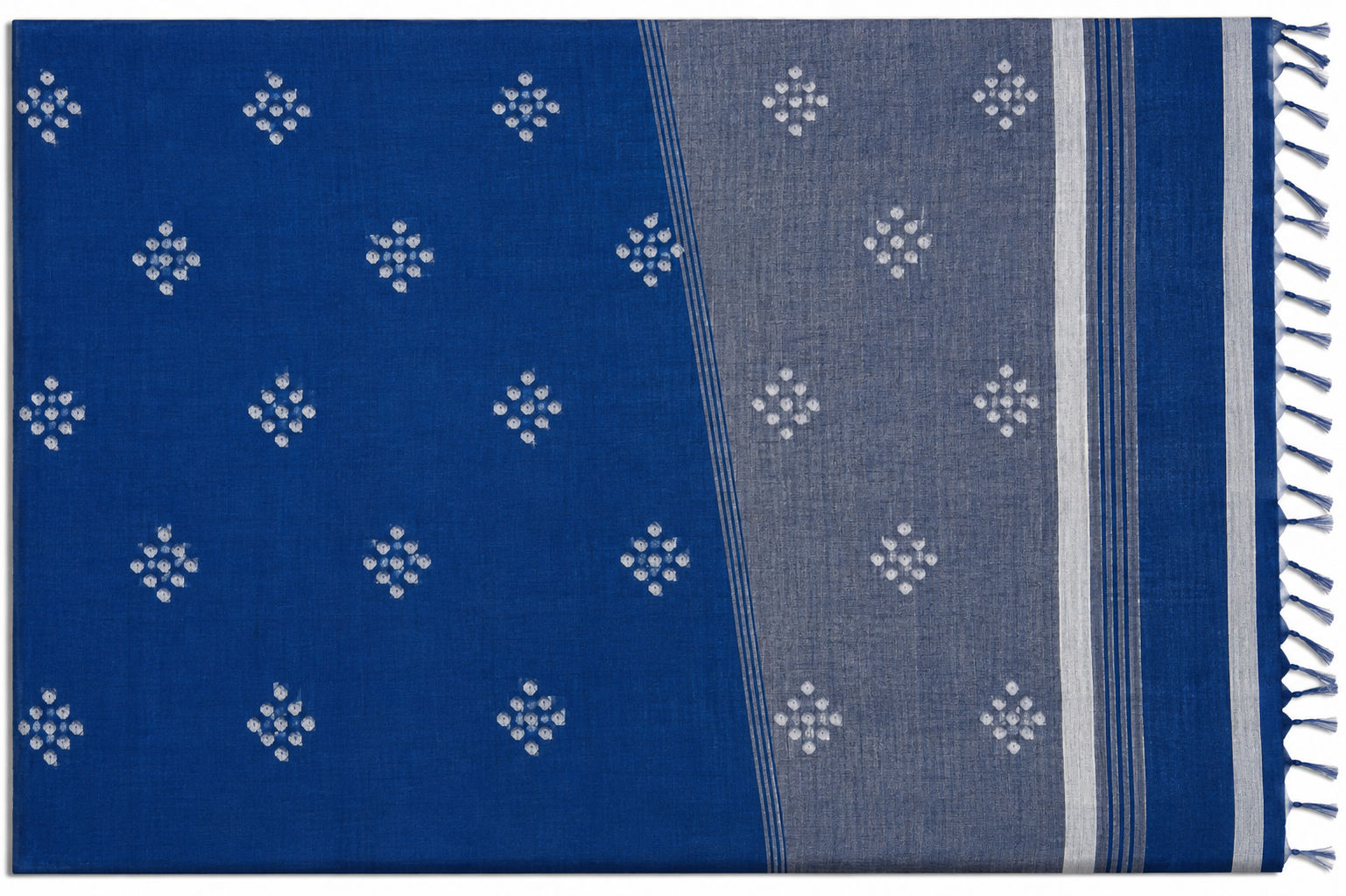
Bawan Buti is one of Bihar's most treasured handloom traditions, renowned for its intricate motifs, cultural significance, and exceptional craftsmanship. Originating from the historic town of Baswan Bigha near Nalanda, this unique weaving technique represents centuries of artistic excellence passed down through generations of skilled artisans. Today, Bawan Buti stands as a symbol of Bihar's rich textile heritage, preserving ancient traditions while adapting to contemporary tastes. What Does "Bawan Buti" Mean? The term "Bawan Buti" comes from two Hindi words: Bawan – meaning fifty-two Buti – meaning motif or design element Traditionally, the fabric features 52 carefully woven motifs repeated across the textile, creating a harmonious and elegant pattern. These motifs are inspired by nature, spirituality, architecture, and cultural symbols that reflect Bihar's historical and religious heritage. Origins of Bawan Buti The roots of Bawan Buti weaving can be traced back to the ancient region of Nalanda, a land celebrated worldwide for its intellectual and cultural achievements. The craft flourished in villages surrounding Nalanda, where weaving became an important livelihood for local artisan communities. Historically, Bawan Buti textiles were patronized by royal families and affluent households. The delicate motifs and refined weaving techniques made these fabrics highly valued for ceremonial attire and special occasions. Over time, the craft became closely associated with Bihar's cultural identity, reflecting the artistic traditions that evolved alongside the region's temples, monasteries, and educational centers. The Art of Weaving Bawan Buti Bawan Buti is woven on traditional handlooms using fine cotton, silk, or blended yarns. What distinguishes this craft is the intricate extra-weft weaving technique used to create raised motifs directly within the fabric. Common motifs include: Lotus flowers Temple structures Conch shells Bodhi leaves Fish Geometric patterns Sacred symbols inspired by Buddhist and Hindu traditions Each motif is woven individually by hand, requiring immense concentration, precision, and patience. A single saree can take several days to weeks to complete, depending on the complexity of the design. Connection to Nalanda's Heritage Bawan Buti is deeply connected to the cultural landscape of Nalanda, one of the world's oldest centers of learning. Many motifs found in Bawan Buti textiles draw inspiration from the architectural details of ancient Nalanda University, Buddhist symbols, and regional folklore. The weaving tradition serves as a living archive of Bihar's history, preserving stories, symbols, and artistic expressions that have endured for centuries. Challenges and Revival Like many traditional crafts, Bawan Buti faced significant challenges due to industrialization, changing consumer preferences, and competition from machine-made textiles. Many artisan families struggled to sustain their livelihoods, leading to a decline in the number of active weavers. However, dedicated efforts by artisan groups, government initiatives, NGOs, and organizations such as Weavehand have helped revive interest in this remarkable craft. Through design innovation, market access, storytelling, and digital platforms, Bawan Buti is finding new appreciation among modern consumers who value authenticity, sustainability, and handmade excellence. Bawan Buti Today Today, Bawan Buti is celebrated not only in traditional sarees but also in: Dupattas Stoles Apparel Home décor products Corporate gifts Contemporary fashion collections The craft continues to evolve while preserving its traditional identity, creating opportunities for artisans and ensuring that this unique weaving heritage remains alive for future generations. Preserving a Living Legacy Bawan Buti is more than a textile, it is a story woven into every thread. It represents the resilience of artisan communities, the richness of Bihar's cultural heritage, and the enduring beauty of handmade craftsmanship. By choosing authentic Bawan Buti products, you support skilled artisans, preserve traditional knowledge, and become part of a centuries-old legacy that continues to inspire the world. Discover Authentic Bawan Buti with Weavehand At Weavehand, we work directly with artisan communities to preserve and promote Bihar's finest handloom traditions. Every Bawan Buti creation carries the skill, heritage, and dedication of the artisans who keep this remarkable craft alive. Experience the beauty of Bihar's living heritage -one weave at a time.
The Technique
Bawan Buti is a traditional handloom weaving technique practiced in the Nalanda region of Bihar. Known for its intricate motifs and elegant patterns, the craft is created entirely on handlooms using the extra-weft weaving technique, where decorative motifs are woven directly into the fabric rather than being printed or embroidered later. The beauty of Bawan Buti lies in its precision, patience, and the skill of the artisan who meticulously creates each motif by hand. Raw Materials Used Traditional Bawan Buti textiles are woven using: Fine Cotton Yarn Silk Yarn Cotton-Silk Blends Mercerized Cotton Natural and dyed yarns The choice of yarn determines the texture, drape, and appearance of the final fabric. Loom Setup Bawan Buti is woven on traditional handlooms, where: Warp threads (Tana) are stretched lengthwise. Weft threads (Bana) are inserted horizontally. Additional weft threads are used to create decorative motifs. The loom is carefully prepared before weaving begins, a process that may take several days. The Extra-Weft Technique The defining feature of Bawan Buti is the Extra-Weft (Supplementary Weft) Technique. Unlike plain weaving, where the fabric is formed only through the interlacing of warp and weft threads, Bawan Buti introduces an additional weft yarn specifically for creating motifs. Process: The base fabric is woven normally. The artisan follows a graph or motif design. Extra threads are inserted manually at selected points. Each motif is woven individually. The process is repeated across the entire fabric. This creates raised, elegant motifs that appear as part of the weave itself.Weaving Process Step-by-Step 1. Yarn Preparation The yarn is cleaned, dyed (if required), and wound onto bobbins. 2. Warping Warp threads are arranged according to the desired width and length of the fabric. 3. Loom Drafting Threads are passed through heddles and reeds to prepare the loom for weaving. 4. Base Fabric Weaving The artisan begins weaving the plain ground fabric. 5. Motif Formation Using extra-weft insertion, motifs are woven manually according to the design layout. 6. Finishing After weaving: Loose threads are trimmed. Fabric is washed and finished. Sarees or garments are prepared for use. Time Required Because every motif is woven by hand: A simple stole may take several days. A Bawan Buti saree can take 10–20 days or more. Complex designs may require several weeks. The time invested makes every piece unique and valuable.
Traditional Motifs
Shop Bawan Buti Products
New Bawan Buti products are coming soon.